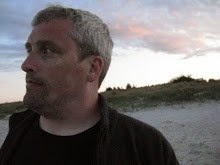
Director
Mark O’Connor arrived at the Galway Film Fleadh with a bang in
2012. Armed with a manifesto and two films under his arm he wanted to
shake up the Irish film industry a little bit. The two films were
King of the Travellers (released in cinemas this year) and his
latest film Stalker which is yet to be released. The manifesto
got quite a bit of press and Stalker was second in the best
Irish feature award (no shame in being second to the excellent Good
Vibrations) and was widely praised at the time. So why hasn’t
the film arrived on our screens? Irish films need publicity to stand
a chance of being seen at the cinemas and considering the marketing
budgets are miniscule surely festival goodwill is an opportunity to
help with the marketing a little bit. This is an argument that will
run and run about why we do not see Irish films at the cinema and it
is one I am sure I will be returning to. But coming back to Stalker,
what does Mark O’Connor have in store for us? Well for me Stalker
is as fascinating an Irish film as I have seen in quite some time.
Stalker
tells the story of Oliver (John Connors), a homeless man wandering
the streets who befriends a young boy called Tommy (Barry Keoghan)
who he helps fight off bullies. Tommy’s life is in a bad way with a
drug addicted mother and a crazy drug dealing uncle Rudyard (Peter
Coonan). Oliver vows to help Tommy but his intensity scares Tommy a
little. Plot wise that is about it but this is a film less inclined
towards plot and more towards tone and feeling.
In my
reviews of O’Connor’s previous films Between the Canals
and King of the Travellers I mentioned that his films feel a
little rough around the edges. That may have sounded like a criticism
and in some ways it was. But it is also a compliment in that it gives
his films a particular feel and tone that not all Irish filmmakers
have. In Stalker he is aided by some beautiful camera work by
Eoin Macken which initially brings a touch of the fairytale to an
otherwise dark film. In the final third the camera work is used in a
heightened fashion which also serves the ending well. So the look of
the film is excellent - what about the rest of it?
John
Connors is superb as Oliver; completely convincing as someone with
some serious mental health problems. He is also co-writer here and he
is a real talent. He commands the screen in a very naturalistic way
and it looks effortless. Barry Keoghan is also very good and is an
actor to watch. The two share some scenes that are intense and
emotional. Peter Coonan is his usual manic self and his character
Rudyard is an odious one. But Coonan plays it a little too broad and
over the top at times and I would like to have seen a little more
control in the performance.
The
film does have some issues. There is a scene set in a cinema that is
a little unconvincing. While I liked the idea of the scene, the way
it plays out doesn’t really ring true. I don’t want to give away
any more details that would spoil it but it comes across as a little
too on the nose in relation to the state of modern Irish filmmaking.
Perhaps it is the script that is at fault here as it gives Oliver too
much information to impart. It is the only time in the film that
Oliver sounds like he is explicitly delivering the words and
viewpoint of the writer rather than just talking. There is also a bit
of a problem towards the climax when the plot and narrative take
over. Stalker (and indeed O’Connor) is at its best when it
is freewheeling along without any real narrative concern. The utterly
strange feeling is more than enough to sustain real interest. But the
film rallies to deliver a really intense and feverish climax that
works very well indeed.
There
is a real feeling here that with Stalker, Mark O’Connor has
finally found his cinematic voice. Stalker has a more
experimental feel and this benefits O’Connor hugely. This approach
may well produce a masterpiece in the future. And with the wonderful
John Connors writing and starring with him he may well have found his
muse. I for one look forward to the next two films arriving in
Galway.
